Meet the Laboratory for NanoBioTechnology at the Department of Biotechnology of Ghent University (updated: October 2025).
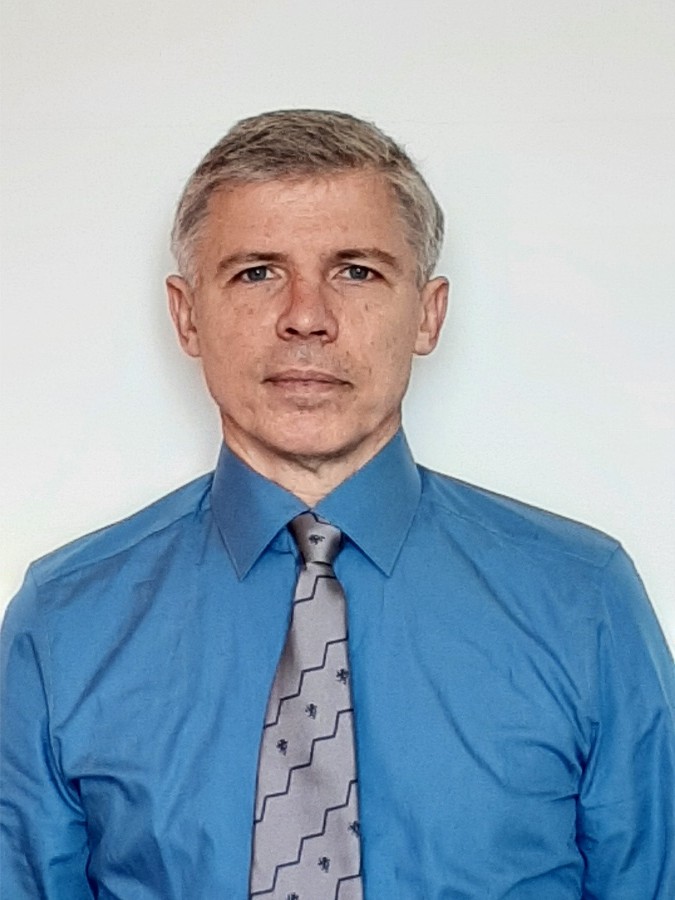
Prof. Dr. Andre Skirtach
Professor
Andre Skirtach was born in Ukraine and studied at a High School there receiving Gold Medal. Subsequently, passing through tough entrance exams at Moscow State University of Lomonosov, Russia, he obtained his MSc degree. He further obtained his Doctor of Philosophy (PhD) degree from McGill University, Montréal, Québec, Canada, consequently joining National Research Council (NRC) in Ottawa. After industrial experience in a prominent local start-up, I have moved back to research and geographically back to Europe from North America. At Max-Planck Institute of Colloids and Interfaces, Golm, Germany, I initially worked as a researcher and then became a Group Leader. Since 2011, I have joined the Faculty of Bioscience Engineering, Ghent University, Belgium. Scientific research interests include development and application of microscopy and analytical methods, nanotechnology and nanobiotechnology, cell biology, cell death and mechanobiology, nanoparticles, polymeric capsules and planar interfaces, self-assembly, and other.
Dr. Bogdan Parakhonskiy
Postdoctoral researcher
I obtained my PhD in Natural Sciences from Lomonosov Moscow State University in 2009. From 2010 to 2014, I worked as a Marie Curie Postdoctoral Fellow at the University of Trento, Italy. Later, I led the theranostic laboratory at Saratov State University, Russia, for two years. Since 2015, I have been part of the Nanobiotechnology group at Ghent University, Belgium, first as an FWO (Flanders Research Foundation) Postdoctoral Fellow and, since 2021, as a Senior Researcher. My research focuses on designing and modifying colloidal particles, studying cell uptake mechanisms, exploring calcium carbonate crystallography, and developing anticancer drug delivery systems. I pioneered advanced container systems, including vaterite-phase calcium carbonate particles, hydrogel matrices, and capsules. Recently, I have incorporated machine learning and data-driven approaches to predict chemical synthesis, analyze material phases, and process image-based datasets in materials science.
Fleur Van Vooren
PhD Researcher
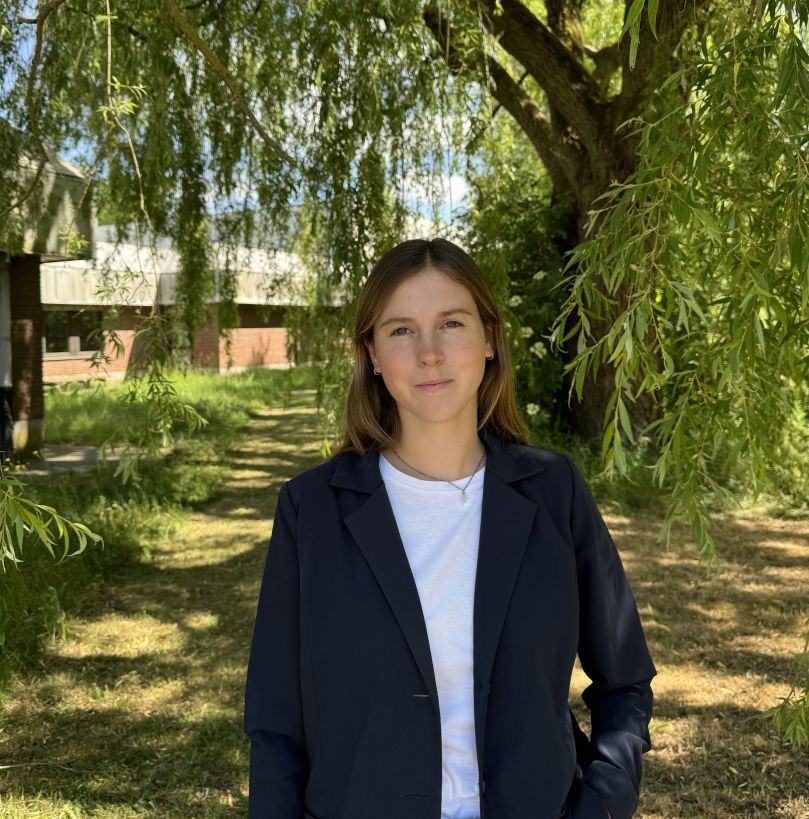
I joined the Nano Group in 2024 and contribute to both research and teaching activities. My research focuses on ferroptosis, a promising regulated cell death modality with potential in cancer therapy and beyond. I am investigating its 3D properties and implications for vaccine improvement via changes in mechanobiological properties. Additionally, I assist in practical courses, guiding students in lab work and exercises, on cell biology, bio-imaging &image informatics, and quantitative cell and tissue analysis.
Jorge García-Balduz
PhD Researcher
I am a PhD candidate within the MSCA Doctoral Network InnoCAR-T. This network is designed to provide high-level training and promote innovative research in the field of Chimeric Antigen Receptor (CAR) T cell immunotherapy. My PhD thesis focuses on the synthesis and functionalization of drug-loaded nanoparticles for targeted delivery via CAR-T cells. The goal is to facilitate their specific transport and controlled release within the tumour microenvironment. By integrating nanotechnology with immunotherapy, my research aims to contribute to the development of next-generation CAR-T cell therapies with improved efficacy.
Jung Won Seo
PhD Researcher
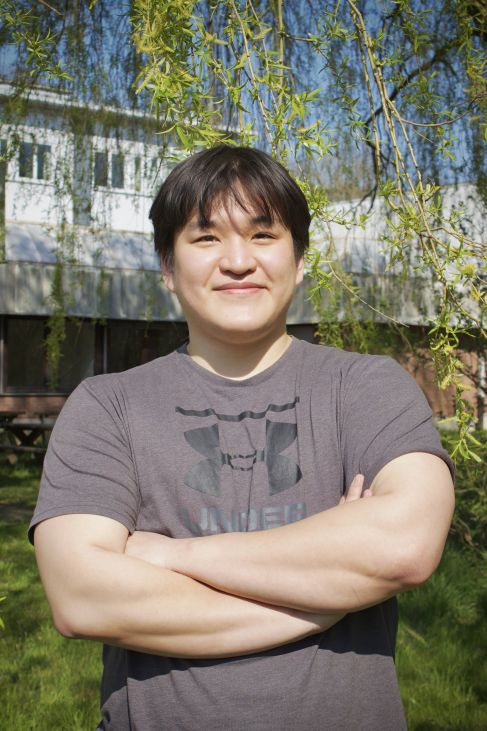
My research focuses on the characterization of various biological samples using cutting-edge technologies such as Atomic Force Microscopy (AFM) and Digital Holographic Microscopy (DHM). As part of the PASCell project, I am developing a microfluidic chip designed to sort microspores and protoplasts undergoing embryogenesis and regeneration.
Junnan Song
PhD Researcher
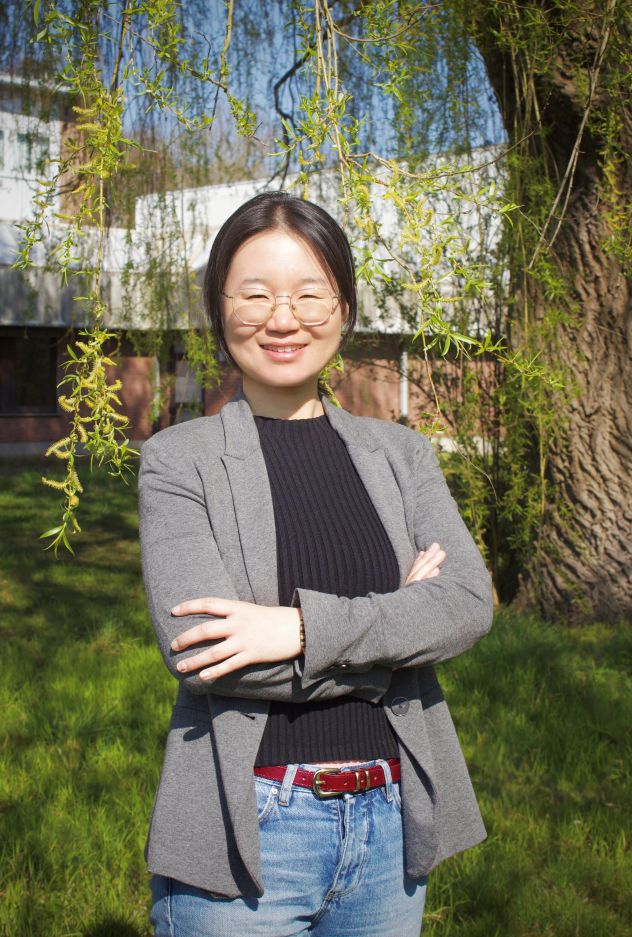
I have been an active member of the Nano Research Team since March 2021. My primary research centers on synthesizing micro- and nano-calcium carbonate particles, particularly in drug delivery systems. By integrating machine learning with materials science to build prediction models from experimental data (e.g., SEM images, XRD data) to optimize synthesis parameters for engineering particles with tailored size, shape, and phase specific to pharmaceutical delivery applications Honor: Silver award in the 7th China International 'Internet +' Innovation Competition (2021) with the project - 'Intelligent Micro-Nano Drug Delivery Robot,' among 500 entries.
Lin Cao
PhD Researcher
I have been a part of the NANO team since 2021. My research topic is the design of organic-inorganic hybrid hydrogels and emulsion-filled gels with applications in biology and food science including functional compound target delivery, drug delivery, and tissue engineering.
Raul Leandro
PhD Researcher
I am a PhD candidate withing the MSCA Doctoral network InnoCAR-T. Network designed to provide high level training and promote the research on chimeric antigen receptor (CAR) Immunotherapy. My PhD focuses on the development of nanoparticles, focusing on lipid nanoparticles, encapsulating endonucleases and other proteins for delivery to T cells. The end goal would be to create CAR-T cells using nanoparticles instead of the common use of virus or eletroporation
Saba Taheri
PhD Researcher
I am a PhD researcher in the in vitro plant biotechnology and nanotechnology lab under the supervision of Prof. Dr. Stefaan Werbrouck and Prof. Dr. Andre Skirtach. My research is focused on the development of slow-release systems for plant growth regulators (PGRs) using mesoporous micro CaCO₃ particles. In contrast to conventional methods, which often result in uncontrolled hormone uptake, this strategy allows for spatial and temporal control crucial for regulated plant development. In the initial phase, CaCO₃ particle aggregates with defined physical properties were designed and successfully tested on model species. Building on these results, the particles are now being applied to the in vitro regeneration of meristems in various plant species. By combining particles with different surface charges, a range of biological responses can be induced, offering new possibilities for developmental control. In a parallel project, supported by the International Atomic Energy Agency, efforts are being made to develop integrated protocols for chimera free in vitro meristem regeneration in olive.
Simona Premcheska
PhD Researcher
I am currently a PhD researcher in Chemistry, working on the ERC starting grant Nanothermometers for Theranostics (NORTH) under the supervision of Prof. Kaczmarek and Prof. Skirtach. I have been a member of the NanoSensing group at the Department of Chemistry (WE06) and the NanoBiotechnology group at the Department of Biotechnology (BW25) since February 2021. My research disciplines include f-block/lanthanide chemistry and photophysics, nanomaterials chemistry, and bio-nanotechnology with a focus on luminescent nanoparticles for temperature sensing in bio-applications. The goal of my PhD work is to develop novel types of multifunctional nanoparticles combining temperature-based diagnosis and (cancer) therapy for theranostics. My synthetic work focuses on combining luminescence thermometry in the physiological temperature range with a therapeutic modality in a single hybrid nanoplatform constructed from Periodic Mesoporous Organosilica (PMO) with lanthanide-doped inorganic nanoparticles (LnNPs) as either cores of the architecture (bottom-up) or grown inside the pores of the PMO particles (top-down). These platforms are evaluated for their in vitro cytotoxicity toward biological applications.
Stanislav Perevoschikov
PhD Researcher
I am a PhD candidate within the MSCA Doctoral Network InnoCAR-T. This network is designed to provide high-level training and promote innovative research in the field of Chimeric Antigen Receptor (CAR) T cell immunotherapy. My PhD research at Ghent University is focused on the development and characterization of novel transfection technologies. The primary goal is to create and optimize new tools for engineering CAR-T cells, which involves using advanced techniques in photonics and microscopy. This work includes in-depth data analysis and management to validate the new methods.
Tangyu Yang
PhD Researcher
I joined the Nano group since Nov. 2024. My main research topic is the development of drug delivery system for colorectal cancer and inflammation based on lipid nanoparticles and calcium carbonate particles. I'm interested in the interfacial regulation of solid particles and multi responsiveness of biomacromolecule in various physiological conditions.
Alumni
Anatolii Abalymov ( PhD in 2021) : Postdoctoral Researcher at Fudan University, Shanghai, China
Dmitry Khalenkow ( PhD in 2021) : Postdoctoral Researcher ad University Medical Center, Groningen, the Netherlands
Ellen Verwee ( PhD in 2024) : Industrial company, Belgium
Fien De Witte ( PhD in 2024) : Postdoctoral Researcher at Ghent University, Belgium
Iuliia Efimova ( PhD in 2024) : Scientific Researcher at 4Tissue, Belgium
Jie Li ( PhD in 2023) : Postdoctoral Researcher at Shanghai Jiao Tong University, Shanghai, China
Joost Verduijn ( PhD in 2024) : Postdoctoral Researcher at Fox Chase Cancer Center, USA
Karaneh Eftekhari ( PhD in 2024) : Biotechnology specialist in Aperion-Team, Belgium
Louis Van der Meeren ( PhD in 2023) : Senier scientist in Trince, Belgium
Pieter Wuytens ( PhD in 2017) : Director of Engineering at Ligentec, Switzerland
Ranhua Xiong ( PhD in 2017) : Professor at Nanjing Forestry University, China
Roman Chernozem ( PhD in 2022) : Professor (Associate), Tomsk Polytechnic University, Tomsk, Russia