Dissolution Recycling of Plastic Waste Chair
Context
Social Challenge
Plastic is an indispensable material in our society. It offers many advantages as a lightweight material and is essential for storing and protecting food and other materials and products. It is also essential in the medical sector, for the energy transition, etc. In short, plastic is interwoven with our (future) daily lives in all kinds of forms.
Unfortunately, plastic has two major disadvantages: it is made from fossil carbon and there is no simple (economic and/or technical) solution for recycling plastic. This means that a lot of fossil carbon is needed to meet the demand for plastic and, at the same time, a mountain of waste is created.
In an ideal world, the carbon would not end up in this waste mountain but would be used to replace fossil carbon. To achieve this, it is essential that well-developed value chains and networks for recycled plastic materials are created. It is not only about the technology, but also about practical implementation. Based on sound technological solutions, further steps will have to be taken towards economic, social, logistical, and personnel implementation.
Plastic recycling
There are various ways to recycle plastics. This can be done mechanically, through chemical recycling, or through “dissolution recycling.”
- Plastics are made up of (different) molecules that are linked together in chains and contain all kinds of additives depending on their different applications. Mechanical recycling preserves this molecular structure. Mechanical recycling often leads to a loss of quality.
- In chemical recycling, the structure is completely broken down. The latter requires a lot of energy. A possible intermediate solution is dissolution recycling. This technology offers the possibility of a higher yield than chemical recycling, while achieving higher quality than mechanical recycling. In addition, this technology requires less energy than chemical recycling.
- In dissolution recycling, the plastic is dissolved in a suitable solvent. The molecular structure is partially broken down and additives and impurities are removed. This produces a pure form of plastic that is virtually identical to plastic made from fossil raw materials, and the additives can also be recovered.
Regional context
The province of Zeeland aims to work towards a sustainable and circular economy. Zeeland is home to several pioneers in the field of dissolution recycling (including PSLoop).
In addition, a significant part of the cross-border port of North Sea Port is located within the province. This cross-border area is home to a variety of waste processing companies and producers of plastics and chemical additives.
In short, there is a whole new value chain to be developed regionally around plastic recycling and the application of dissolution recycling on a larger scale within the region. Within North Sea Port, the circular use of raw materials, especially carbon-containing raw materials, is an important priority. In the wider region, there is a wide variety of plastic producers and logistics players who also need solutions for this value chain.
Within Ghent University, various research groups are active in the field of innovative recycling technologies. The LCPE research group, led by Prof. Steven De Meester, has been working for years on the theme of dissolution recycling for different types of polymers and dealing with possible contaminants that prevent recycling. At the chemical technology laboratory, Prof. Kevin van Geem and his team are working on innovative concepts for chemical recycling (such as pyrolysis and gasification). Prof. Jo Dewulf is studying the social impact of various new concepts with colleagues in the Sustainable Systems Engineering research group.
Aim
The establishment of this chair will make it possible to accelerate research into this technology and, together with partners, to devote more attention to the issues of industrial upscaling and the practical implementation of new technologies.
One of the chair's objectives is to disseminate knowledge about dissolution-based recycling technologies among stakeholders (industry, government, and citizens). In terms of industrial stakeholders, we are targeting all players in the value chain, such as polymer producers, product developers, waste processors, and logistics players. This also allows us to increase the acceptance of the technology among all stakeholders (industry, government, regulatory bodies, citizens).
In this way, we are making this technology more accessible and increasing the likelihood of its application. This chair ensures the availability of knowledge in the region. This is essential to provide future value chains and networks with sufficient technical knowledge and to increase the regional labour potential. Through this chair, and with the knowledge already built up in recent years, Ghent University can position itself as the reference point for dissolution recycling.
Themes in the field of technology that will be addressed in the chair include the selection of (green) solvents, the stability of solvents when in contact with impurities, upscaling and robustness of the technology, for example through continuous precipitation and the further removal of problematic additives such as flame retardants and pigments. A steering group consisting of academics and representatives of the donors will supervise the activities and support the search for new opportunities to further develop the theme.
Donors


Period
11/2025 - 10/2029
Supervisor

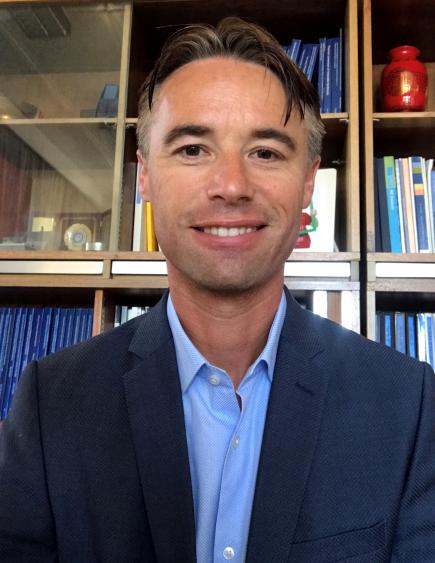
Prof. Steven De Meester has been a senior lecturer at the Department of Green Chemistry and Technology (Faculty of Bioengineering Sciences) since 2016. After completing his studies in bioengineering sciences, he joined the EnVOC research group. There, he worked as a sustainability advisor on the feasibility study for FISCH in collaboration with essenscia (Flanders) and on the ERDF project eco2chem.
He obtained his PhD during his research within the FP7 project PROSUITE (Prospective Sustainability Assessment of Technologies). He was also active as a project manager at OWS NV and at Capture, an interdisciplinary research initiative in which scientists work together with the sector to seek innovation and valorization in the recovery of raw materials. He teaches courses on waste processing, chemical technology, thermal operations, environmental management systems, and environmental impact analysis, among other topics.
Drawing on his background in chemical technology and sustainability assessment, he conducts research into the sustainable design of chemical production chains, particularly the purification of components from complex streams such as waste plastics. This involves analyzing the complex raw material stream and then developing a suitable purification chain. This is then scaled up and optimized for the best possible economic and environmental performance.
Co-supervisor

Co-supervisor