Transport Technology
Fundamental research
To model the combustion process fundamental properties of fuels, fuel-air mixtures, exhaust gas, ... are necessary.
For the fuel, this includes determination of chemical (e.g. combustion heat), physical (e.g. viscosity) and combustion properties (e.g. visualization of flame propagation, spray formation or auto-ignition processes). For the characterization of the combustion properties, we designed at University Ghent a constant-volume combustion chamber, named GUCCI (Ghent University Combustion Chamber I).
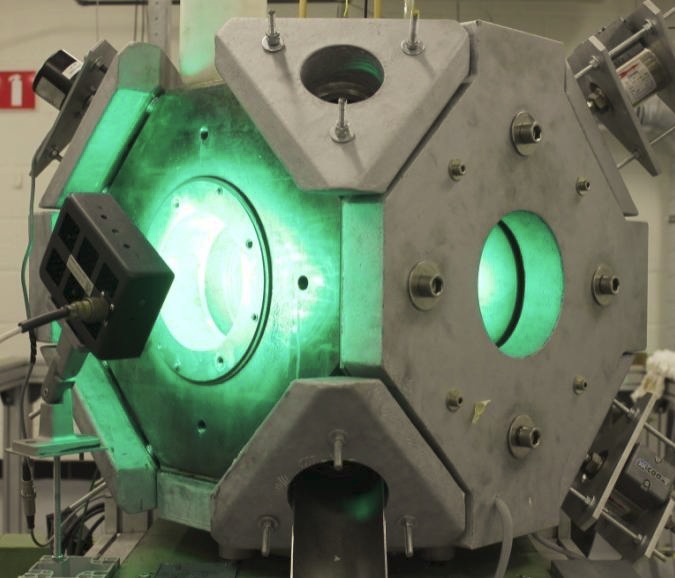
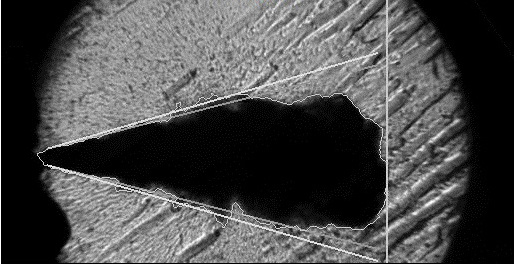
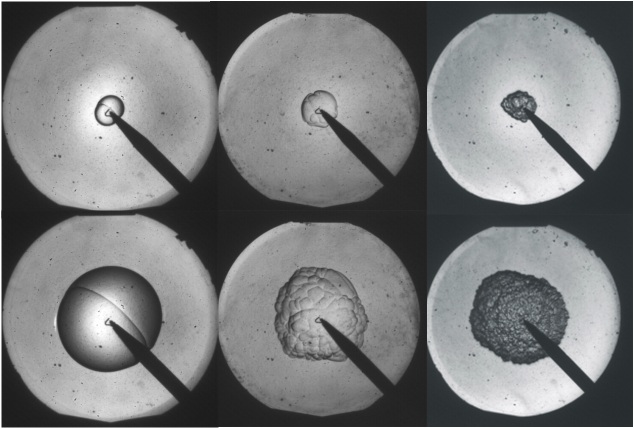
Although not strictly fundamental, there are properties of an engine that can be measured more easily than calculated. For example the amount of flow passing through an inlet or outlet port given a certain valve lift. This is very difficult and time consuming to calculate, while it is relatively easy to measure with specialized equipment using a FLOWBENCH.
Experimental work
When trying to model and understand an engine, accurate measurements of engine characteristics are necessary. After all, models of physical and chemical processes are only useful when the correlate well with correct measurements.
Six engine test benches are currently used for experimental work
Single cylinder flex fuel engine
Experiments with alcohol, water and gasoline blends to study the effect on knock, efficiency, .... Can be used for both liquid and gaseous fuels.

Single cylinder flex fuel engine
Used for in-cylinder heat transfer. Can be used for both liquid and gaseous fuels.

Four cylinder flex fuel engine
Experiments with alcohol, water and gasoline blends to study the effect on knock, efficiency, .... Can be used for both liquid and gaseous fuels.

Volvo penta
As part of the Horizan 2020 Leanships, this Volvo Penta D7 engine (265 hp) was converted to dual fuel operation on methanol and diesel.

Volvo T3
This Volvo 4 cylinder engine is equipped with a high pressure pump for DI, a turbocharger, EGR and variable valve timing.

6DL36 ABC Engine
For the development of this 6 cylinder ABC engine, ABC is doing the development and tests while UGent supports through simulation and measuremnts on the GUCCI setup.

All engines are fully instrumented in terms of pressure, temperature and emission measurements (except forPM).
We also have portable equipment for measuring on engines in the field. We cooperate closely with Anglo Belgian Corporation and are able to instrument their engines with temporary equipment. This supports the optimization of medium high speed marine engines.
Numerical simulations
A large part of our activity is the development of simulation tools for engine optimization.
For SI-engines, the group has developed a multi-zone thermodynamic engine model in-house, the GUEST code (Ghent University Engine Simulation Tool), which is coupled to commercial software to simulate gas dynamics in the intake and exhaust stroke.
