Righttech for low-carbon building design
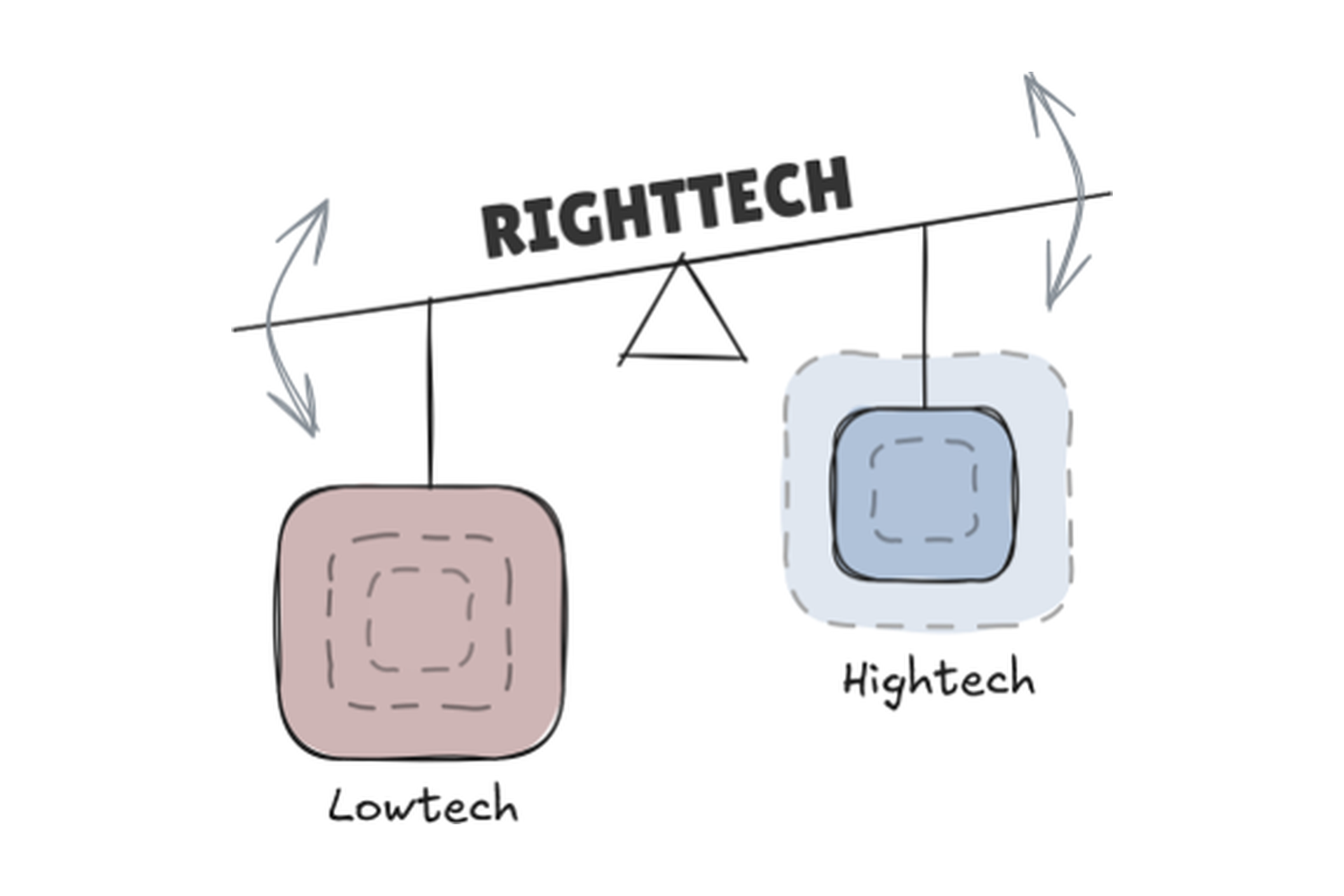
In energy-efficient buildings, the environmental impact is shifting from operational energy use towards the embodied impact of building materials and technical installations. Technical installations can account for up to 50% of a building’s total embodied impact, and their contribution continues to grow as buildings increasingly rely on technical installations.
This raises the question of whether low-tech design offers a more sustainable alternative. Low-tech is based on simple, robust, passive strategies that leverage the inherent performance of the building design. While this approach offers clear potential, it remains unclear whether it results in a lower life cycle environmental impact compared to high-tech design strategies. Although low-tech design reduces the need for technical installations and thereby their embodied impact, low-tech measures themselves also result in embodied impacts.
To address this challenge, this project investigates the concept of righttech: a design approach that seeks the optimal balance between low-tech strategies and technical installations, accounting for life cycle environmental impact, energy performance, thermal comfort, thermal resilience, financial cost, and adaptability. The aim is to develop a scientifically substantiated and reproducible decision-support framework that enables designers to identify righttech concepts for low-carbon buildings at an early stage of the design process.
The project is a collaboration between Ghent University, KU Leuven, and archipelago, funded through a VLAIO Innovation Mandate (Phases 1 and 2).
Project Info
Research group: Building Physics
Duration: from 01-11-2026 to 31-10-2029
Researcher: Yanaika Decorte
Academic supervisors: Marijke Steeman, Hilde Breesch (KU Leuven) and Joost Declercq (archipelago)