Education
Chemistry is the key enabling science for the products we use in our everyday life. Chemistry is indispensable to secure a sustainable development of all our societies. For the chemical sector to play an active role in a changing world, in-depth knowledge of chemistry needs to be complemented with sound expertise on sustainability.
Education at Leuphana Professional School, Lüneburg, Germany
- Academic Qualification in Chemistry for a Sustainable Future - M.Sc. Sustainable Chemistry and MBA Sustainable Chemistry Management at Leuphana Professional School, Lüneburg, Germany.
- Textbook: Chemistry Education for a Sustainable Future
Now and in the years ahead, we need to sustain all life on our planet. How do we do this? Chemistry, the science of materials, provides part of the answer to this question. Practicing chemistry in a green and sustainable manner is essential to achieving a sustainable future. However, sustainability concepts seldom are taught in the chemistry classroom. For example, the connections between chemistry and systems thinking, planetary boundaries, sustainable development goals, and ethics are not widely taught, yet these all can inform how we can sustain life now and in the future. Chemistry Education for a Sustainable Future addresses what our students need to learn today to help all people and the planet thrive. This book provides a logical sequence of topics and offers chemistry educators practical strategies to equip today’s students with the tools needed to become scientists and citizens who can responsibly contribute to a sustainable future. The textbook is edited by: Catherine H. Middlecamp; Mary M. Kirchhoff; Peter Mahaffy; Klaus Kümmerer - DOI: https://doi.org/10.1039/9781837676576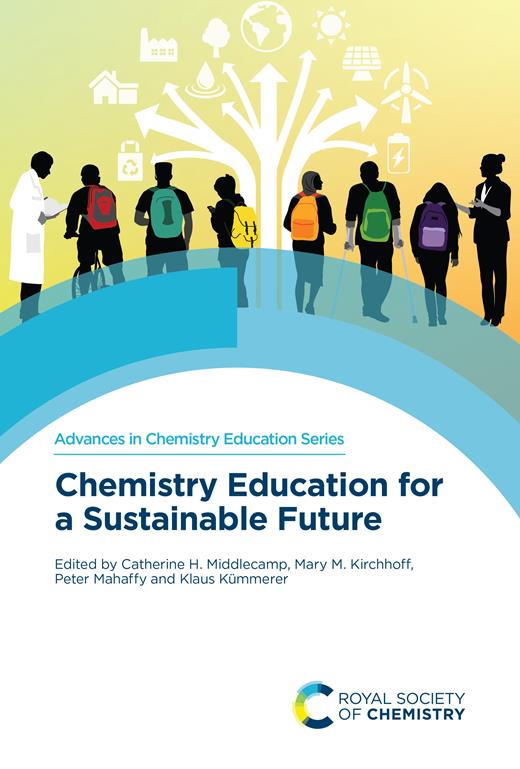
Education at University of York, York, UK
- Discover how green chemistry can help with the industrial challenges faced by increasing demand for sustainable products and processes - MSc. Green Chemistry and Sustainable Industrial Technology.
-
Textbook: Greener Organic Transformations
Green chemistry has progressed from being a driver for change in the chemical and allied industries to being a critical part of chemical education at all levels. The future chemist must be able to practice their trade in the light of increasing concerns about waste and resources, the safety of chemicals in consumer products, and increasingly restrictive legislation. While there are green chemistry educational resources available including lectures and experiments as well as numerous books on green chemistry and major green chemical technologies, there is no “green equivalent” of a standard organic chemistry textbook
Systematically covering a variety of well-known reactions that commonly feature in standard organic textbooks this book supplements and supports the standard organic chemistry texts. It highlights the main sustainability issues of classical and contemporary organic transformations and critically evaluates them within a metric of established Green Chemistry Principles noting where additional efforts are needed to improve their environmental footprint. Written by a team of expert authors with a multinational advisory board, this book is a fantastic resource for advanced undergraduate and postgraduate students worldwide.
Continue to integrate green chemistry courses at undergrad and postgrad level at UGent
Beyond Benign provides educators with the tools, training and support to make green chemistry an integral part of chemistry education. UGent GREEN CHEM partner Catherine Cazin has recently signed an agreement to join the BeyondBenign. An introduction to green chemistry is given to the first year students, and a year-long course is embedded in the Master of Chemistry students called Professional skills of the sustainable chemist. In addition, the Master of Science in Bioscience Engineering: Chemistry and Bioprocess Technology, aims to offer a broad education in applied chemistry, biochemical and microbial technology and chemical and biochemical engineering techniques. Not only does our program focus on fundamental knowledge, it also zooms in on industrial production. The study program addresses the social demand for the use of sustainable production processes and clean technologies.